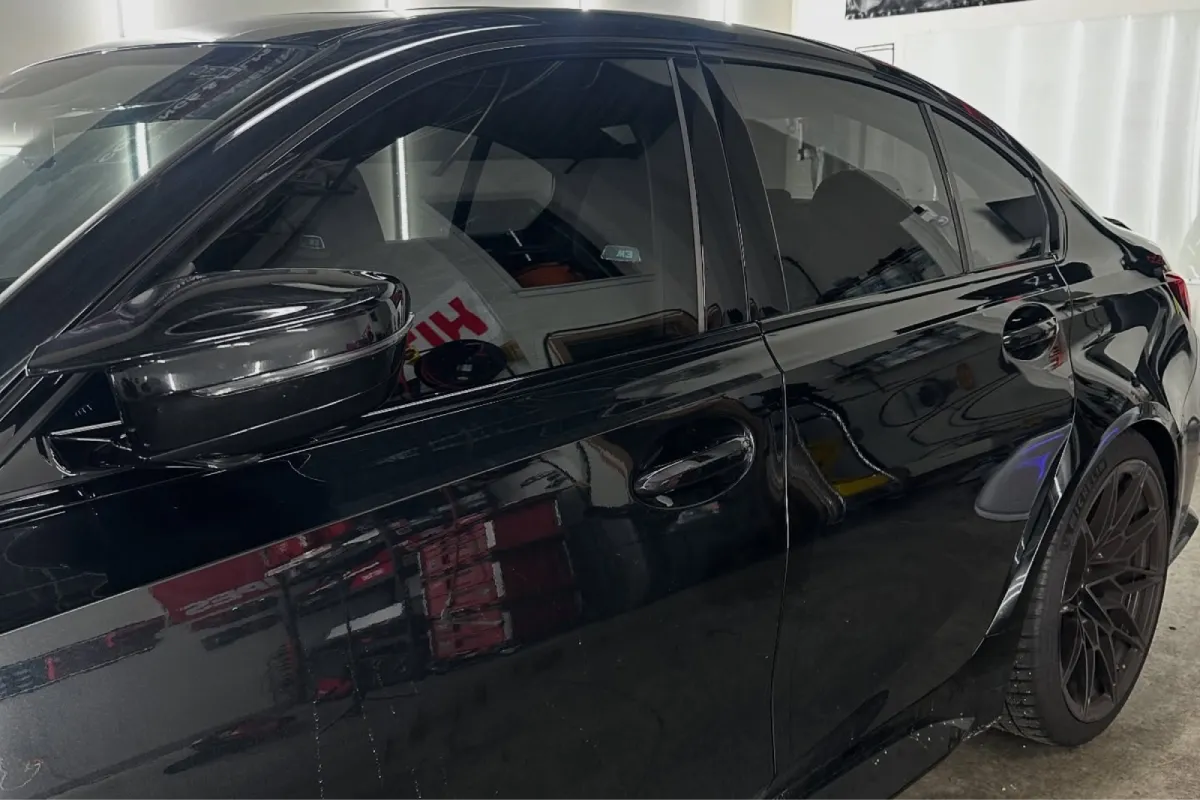
Window tinting protects your skin by blocking up to 99% of harmful UV rays that pass through untreated glass. This significantly reduces daily exposure to UVA and UVB radiation while driving. Over time, it helps prevent premature aging, sun damage, and long-term skin health risks, making it one of the most practical upgrades for both comfort and protection. For drivers who spend a lot of time on the road, window tinting is not just a cosmetic upgrade; it’s a health-conscious decision that adds real daily value.
What Is Window Tinting and How Does It Block UV Rays?
Window tinting involves applying a thin, high-performance film to the inside of a vehicle’s glass surfaces. While many people think of tint as something used only for style or privacy, its most important function is invisible: filtering harmful solar radiation before it reaches the occupants inside the vehicle.
Modern window films are engineered using advanced materials that selectively block ultraviolet (UV) rays and infrared (IR) heat while still allowing safe levels of visible light transmission. This means you can reduce exposure to damaging sunlight without sacrificing visibility or driving safety.
Unlike older tint technologies, today’s films are designed with multi-layer construction. Each layer plays a role in filtering light, rejecting heat, and maintaining clarity over time. This is why professional-grade tint performs significantly better than low-quality alternatives.
Key Features of Window Tinting
- UV Protection: Blocks up to 99% of harmful UVA and UVB rays
- Heat Rejection: Reduces interior heat buildup from sunlight
- Glare Reduction: Improves visibility and reduces eye strain
- Infrared Blocking: Limits heat penetration without darkening glass excessively
- Enhanced Privacy: Adds a layer of discretion and security
For drivers researching window tinting in St. Louis Park, MN, these features go far beyond aesthetics; they directly impact daily comfort and long-term health.
Why UV Exposure Inside Your Car Is a Real Concern
Many drivers assume they are fully protected from the sun while inside their vehicle. Unfortunately, that assumption is only partially correct. Standard automotive glass blocks most UVB rays but still allows a significant amount of UVA radiation to pass through.
UVA rays are especially concerning because they penetrate deeper into the skin and contribute to long-term damage over time. This exposure is cumulative, meaning small daily doses can add up significantly over months and years of driving.
Hidden Risks of Driving Without Tint
- Cumulative Exposure During Commutes: Even short trips to work or errands gradually increase UV exposure over time.
- Uneven Skin Damage: Drivers often experience more sun damage on the left side of their face and arm due to side-window exposure.
- Premature Aging: Fine lines, wrinkles, and sunspots can develop faster with repeated exposure.
- Increased Risk of Skin Issues: Long-term UVA exposure is linked to serious skin conditions over time.
- Interior Heat Amplifies Exposure: A hotter cabin increases discomfort and can intensify the perception of UV exposure.
Drivers commuting through busy routes between Minneapolis, Minnetonka, and surrounding suburbs often underestimate just how much time they spend exposed to sunlight through their vehicle windows.
Window Tint vs Untinted Glass
| Feature | Tinted Windows | Untinted Glass |
| UV Protection | Up to 99% blocked | Limited protection |
| Heat Reduction | High | Low |
| Glare Control | Significant | Minimal |
| Skin Protection | Strong | Weak |
| Interior Comfort | Cooler | Hotter |
This comparison clearly shows why more drivers are investing in St. Louis Park window tinting as a functional upgrade, not just a cosmetic one.
Types of Window Tint and Their Protection Levels
Not all window tint films perform the same. The type of film you choose determines durability, heat rejection, clarity, and overall performance.
Common Types of Window Tint
- Dyed Film
- Provides basic appearance enhancement and minimal heat rejection. Often chosen for budget-friendly visual upgrades.
- Metalized Film
- Uses reflective particles to block heat and UV rays, but may interfere with electronic signals.
- Carbon Film
- Offers a matte finish with improved heat rejection and no signal interference.
- Ceramic Film
- Premium-grade option providing maximum UV protection, superior heat rejection, and crystal-clear visibility without excessive darkening.
For those considering window tinting in St. Louis Park, ceramic film is often recommended for its superior performance and long-term value.

Additional Benefits Beyond UV Protection
While skin protection is a major advantage, window tinting offers several other practical benefits:
- Keeps your vehicle cooler during hot days
- Reduces strain on your air conditioning system
- Protects interior surfaces from fading and cracking
- Improves driving visibility by reducing glare
- Enhances the overall look of your vehicle
During a recent consultation with a client, the primary concern was heat buildup, but after installation, they quickly noticed improved comfort and reduced glare during daily drives through Edina.
Signs You Should Consider Window Tinting
If you’re unsure whether tinting is right for you, here are a few clear indicators:
- You frequently drive during daylight hours
- Your car interior becomes uncomfortably hot
- You notice glare affecting visibility
- Your skin feels sensitive after long drives
- Interior materials are starting to fade
These are common concerns among drivers searching for St. Louis Park, MN, window tinting solutions.
The Final Touch Precision-Seal Process
Professional window tinting stands apart because of a refined, step-by-step approach designed to maximize both performance and longevity. Our Final Touch Precision-Seal Process is engineered to ensure every layer of film delivers optimal heat rejection, UV protection, and crystal-clear visibility without compromise.
It begins with a meticulous surface preparation phase, where glass is deep-cleaned and decontaminated to eliminate any particles that could affect adhesion. From there, premium-grade film is precision-cut using advanced technology, ensuring an exact fit for your vehicle’s windows. This eliminates gaps, uneven edges, and the common imperfections often seen with rushed or DIY installs.
During installation, certified technicians apply the film using controlled techniques that prevent bubbling, creasing, or distortion. Each edge is carefully sealed, reinforcing durability and preventing peeling over time. This “precision-seal” step is what locks in long-term performance, helping the tint maintain its clarity, strength, and effectiveness even under constant sun exposure.
The process concludes with a final quality inspection and curing phase, ensuring the film bonds properly and performs as intended. The result is not just a cleaner look but also a measurable upgrade in comfort, privacy, and protection.
With the Final Touch Precision-Seal Process, window tinting becomes more than a visual enhancement; it becomes a long-term investment in your vehicle’s comfort, safety, and overall driving experience.
Common Misconception About Window Tinting
Myth: Window tint is only for looks and privacy
This is one of the most common misunderstandings.
The truth:
While tint enhances appearance, its primary purpose is functional, protecting against UV rays, reducing heat, and improving driving comfort.
High-quality window tint is a performance upgrade, not just a visual one.
How Professional Window Tint Installation Works
Proper installation is critical to achieving long-lasting results.
Step-by-Step Process
- Thorough Window Cleaning
Removes dust and contaminants - Precision Film Cutting
Ensures an exact fit for each window - Careful Application
Film is applied smoothly to avoid bubbles - Squeegee and Alignment
Ensures even adhesion across the surface - Final Inspection and Curing
Confirms quality and allows the film to set properly
At Final Touch Auto Works, this process is handled with attention to detail and clear communication, so you always know what to expect.
Protect Your Skin and Drive in Comfort
Window tinting is more than just a visual upgrade; it’s a smart investment in your comfort, health, and driving experience. By blocking harmful UV rays, reducing heat, and improving visibility, it delivers real, everyday benefits.
At Final Touch Auto Works, we believe in honest recommendations, expert craftsmanship, and building long-term relationships with our clients. Our goal is to help you feel confident in your decision and proud of the results.
Ready to upgrade your vehicle? Contact us to schedule a consultation or request a quote today.
People Also Ask
Does window tint really block UV rays?
Yes, high-quality window tint can block up to 99% of harmful UV radiation.
Is window tinting worth it for skin protection?
Absolutely. It reduces daily UV exposure, which helps prevent long-term skin damage.
How long does window tint last?
Premium window tint can last 5-10 years or longer with proper care.
What is the best type of tint for UV protection?
Ceramic tint offers the highest level of UV and heat rejection.
Will window tint make my car too dark?
Not necessarily. You can choose tint levels that balance visibility, legal compliance, and protection.